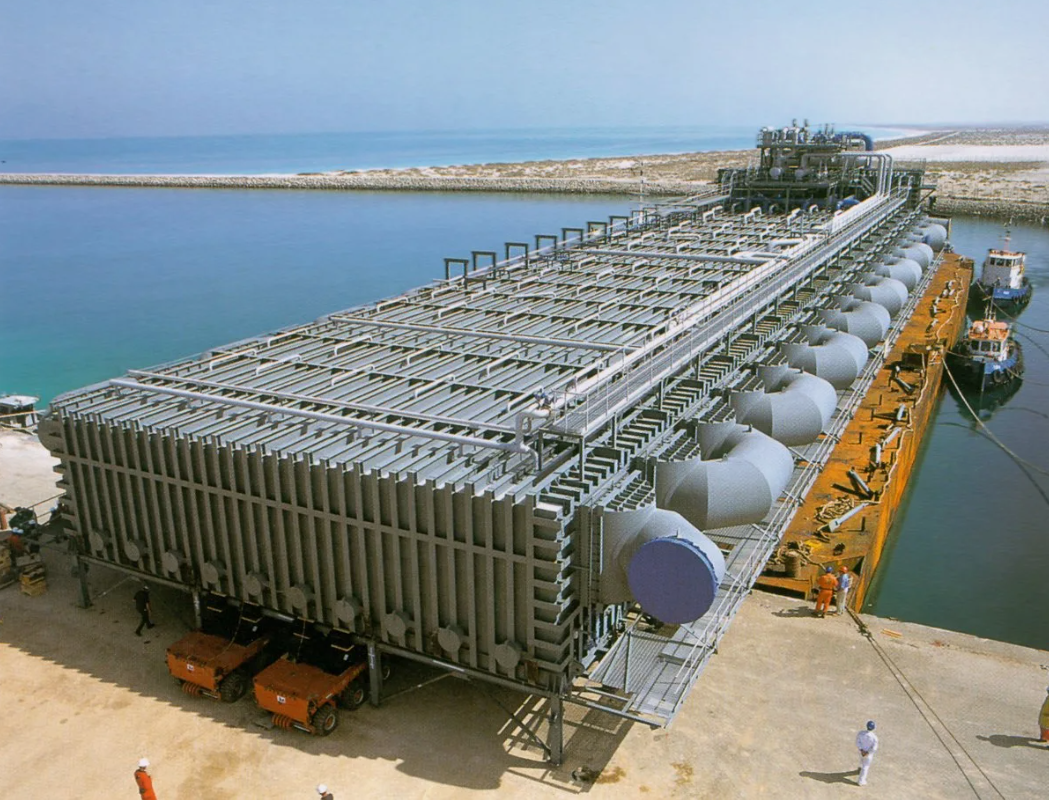
Morocco is set to boost its investments in constructing desalination facilities for seawater. According to a report by Reuters, citing Morocco's Minister of Water Resources, Nizar Baraka, the country will build nine additional desalination plants.
During the Medias24 conference focused on water challenges in Casablanca, Baraka revealed that Morocco currently operates 17 desalination units. Four more plants are under construction, and an additional nine are planned to help achieve a total capacity of 1.7 billion cubic meters of water per year by 2030.
The minister stated that the desalinated water would not be used for wheat cultivation due to its high costs and the scale of agricultural lands. However, it will help release more dam water for farm needs.
Due to uneven rainfall distribution across the country, the existing major water pipeline that already connects the northwest with Rabat and Casablanca is set to be expanded by 2030. This will ensure water supply to dams supporting farmers in the arid regions of Doukkala and Tadla.
The water pipeline project receives funding support from the UAE under an agreement that also includes constructing a 1400 km power transmission line by 2030. This line will deliver renewable energy produced in southern Morocco to desalination plants across the country. Utilizing renewable energy is intended to reduce the cost of water.
In February, Morocco's livestock population, including cattle and sheep, decreased by 38% over the past nine years due to prolonged droughts, according to Agriculture Minister Ahmed Al-Bouari's statement on Thursday.
The six-year-long drought has led to decreasing water levels in dams, massive job losses in the agricultural sector, and accelerated the desalination program. The minister highlighted that in 2025, rainfall levels were 53% below the average of the past three decades.
Anna Bespalova
 НАШ TELEGRAM КАНАЛ
 НАШ VK КАНАЛ